

What Brain Scans Are Revealing About Acupuncture and Depression
/Acupuncture has long been used to support emotional well-being, stress management, and overall balance. Now, emerging research is giving scientists a closer look at what may actually be happening inside the brain during acupuncture treatment.
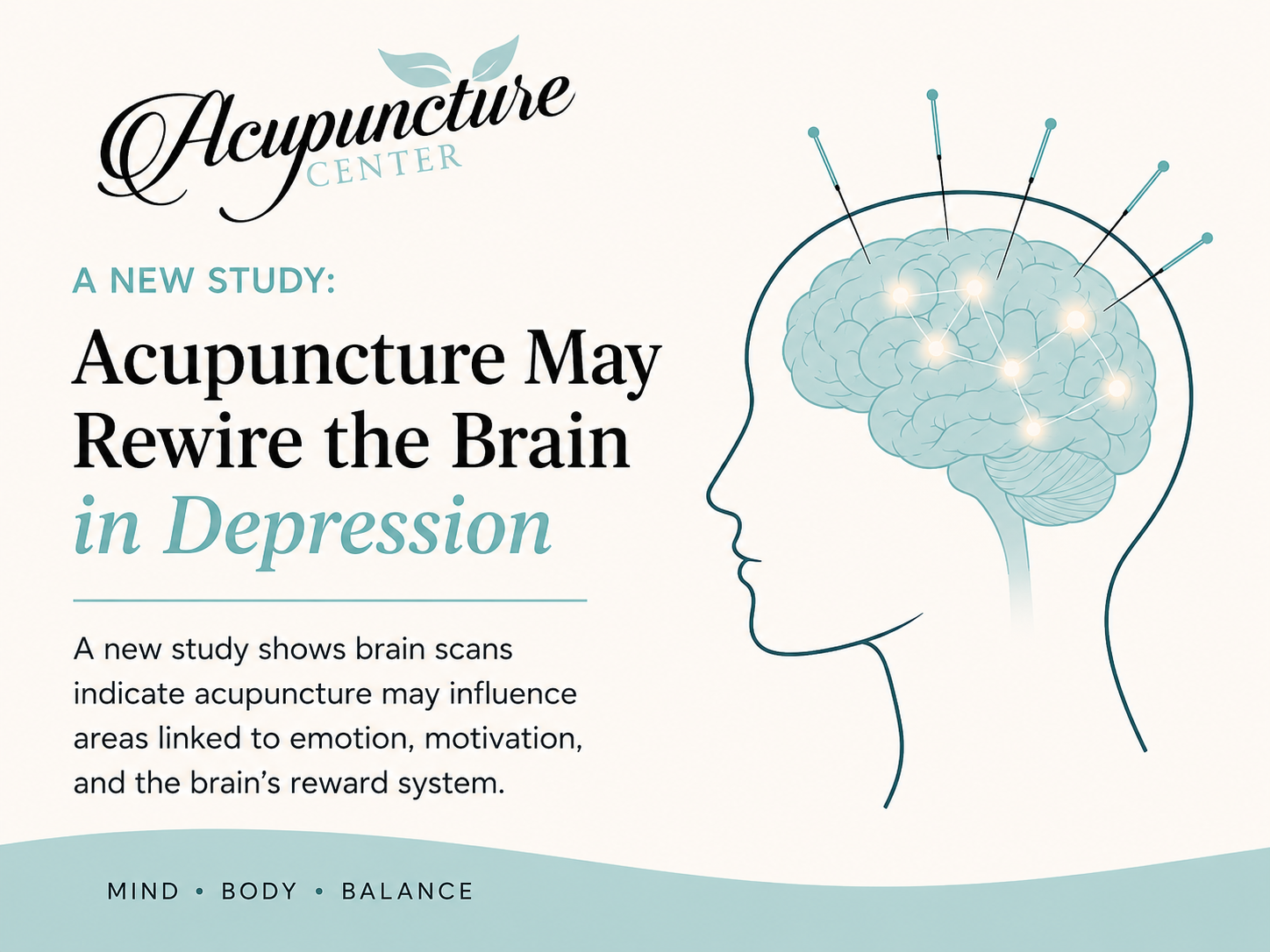
A recent article published by ScienceAlert highlighted new research suggesting that acupuncture may influence brain regions involved in emotion, motivation, and reward in people with major depressive disorder. The findings are particularly interesting because the brain changes associated with acupuncture appeared to differ from those seen with conventional antidepressant treatment.
While researchers are still learning exactly how acupuncture may affect the brain, the study adds to a growing body of research exploring its potential role as a complementary treatment for depression.
What Did the Research Find?
The research discussed by ScienceAlert was published in the medical journal Medicine. Researchers led by a team from Beijing University of Chinese Medicine reviewed brain-imaging data from seven previous clinical trials involving 357 people with major depressive disorder.
Rather than simply looking at whether participants reported feeling better, researchers examined changes within the brain itself.
Among participants who received acupuncture, researchers identified changes in areas associated with emotional regulation and the brain’s reward system. In particular, increased activity was observed in the right cingulum and right caudate nucleus. Researchers also found an association between receiving more acupuncture sessions and changes within the amygdala, an area heavily involved in processing emotions.
In other words, acupuncture may be influencing some of the neurological pathways involved in how people experience and regulate emotions.
Acupuncture and Antidepressants May Affect the Brain Differently
One of the most interesting aspects of the research was that acupuncture and antidepressant treatment did not appear to produce identical patterns in the brain.
Participants receiving conventional antidepressant treatment showed changes in areas including the hippocampus, which plays an important role in memory and stress regulation, and a region involved in visual processing. Acupuncture, meanwhile, appeared to have a stronger association with areas related to emotion and reward processing.
That doesn’t mean one approach is necessarily “better” than another. In fact, most of the people receiving acupuncture in the studies were also taking antidepressant medication. Instead, researchers believe the findings may help explain why acupuncture could potentially complement conventional mental health treatment rather than simply duplicate its effects.
Why the Brain’s Reward System Matters
Depression can affect much more than mood. Some people experience a loss of interest or pleasure in activities they normally enjoy, a symptom known as anhedonia.
Because the caudate nucleus is involved in motivation and reward, changes in this area could offer one possible explanation for why acupuncture has been associated with improvements in certain depressive symptoms.
Researchers noted that the relationship between changes in emotional brain circuits and improvements in symptoms may offer clues about how acupuncture works neurologically. However, they also emphasized that scientists still do not fully understand the biological mechanisms involved.
Acupuncture May Support the Brain in More Than One Way
This isn’t the only recent research examining acupuncture and brain activity.
A separate 2026 randomized, sham-controlled study found that people receiving real acupuncture for mild-to-moderate depressive disorder experienced improvements in depression and anxiety scores. Brain imaging also showed increased activity and stronger connectivity within portions of the prefrontal cortex, an area involved in functions such as emotional regulation, attention, and decision-making.
Other 2026 research has likewise explored changes in cerebral blood flow and functional connectivity following acupuncture in people with major depressive disorder.
Together, findings like these are helping researchers investigate acupuncture as more than simply a relaxation technique. They suggest there may be measurable neurological responses occurring during and after treatment.
What Does This Mean for People With Depression?
It is important to keep the findings in perspective.
The research reviewed by the Beijing University of Chinese Medicine team involved a relatively small overall number of participants, and the seven clinical trials did not all use identical acupuncture protocols. Researchers say larger and more diverse studies, along with longer follow-up periods, are still needed.
Acupuncture should also not be viewed as a replacement for prescribed medication, psychotherapy, or other mental health treatment without guidance from an appropriate healthcare provider.
Instead, acupuncture may be considered as part of a broader, individualized approach to wellness and mental health.
A Complementary Approach to Emotional Wellness
For people dealing with stress, low mood, anxiety, or emotional fatigue, acupuncture treatments can be tailored to the individual rather than focused solely on a diagnosis.
At NJ Acupuncture Center, acupuncture may be incorporated into a wellness plan designed to support relaxation, sleep, stress management, and emotional balance.
The emerging brain-imaging research is exciting because it offers scientists new ways to understand why some patients report emotional benefits from acupuncture. As research continues, we may gain an even clearer picture of how acupuncture interacts with the nervous system and the brain.
For now, the findings offer another compelling reason to continue studying acupuncture as a complementary option for supporting both physical and emotional well-being.
This post was inspired by David Nield’s August 18, 2026 ScienceAlert article, “Acupuncture Seems to Rewire The Brain in Depression, Scans Reveal,” which reported on research published in the journal Medicine.