

What Brain Scans Are Revealing About Acupuncture and Depression

Acupuncture has long been used to support emotional well-being, stress management, and overall balance. Now, emerging research is giving scientists a closer look at what may actually be happening inside the brain during acupuncture treatment.
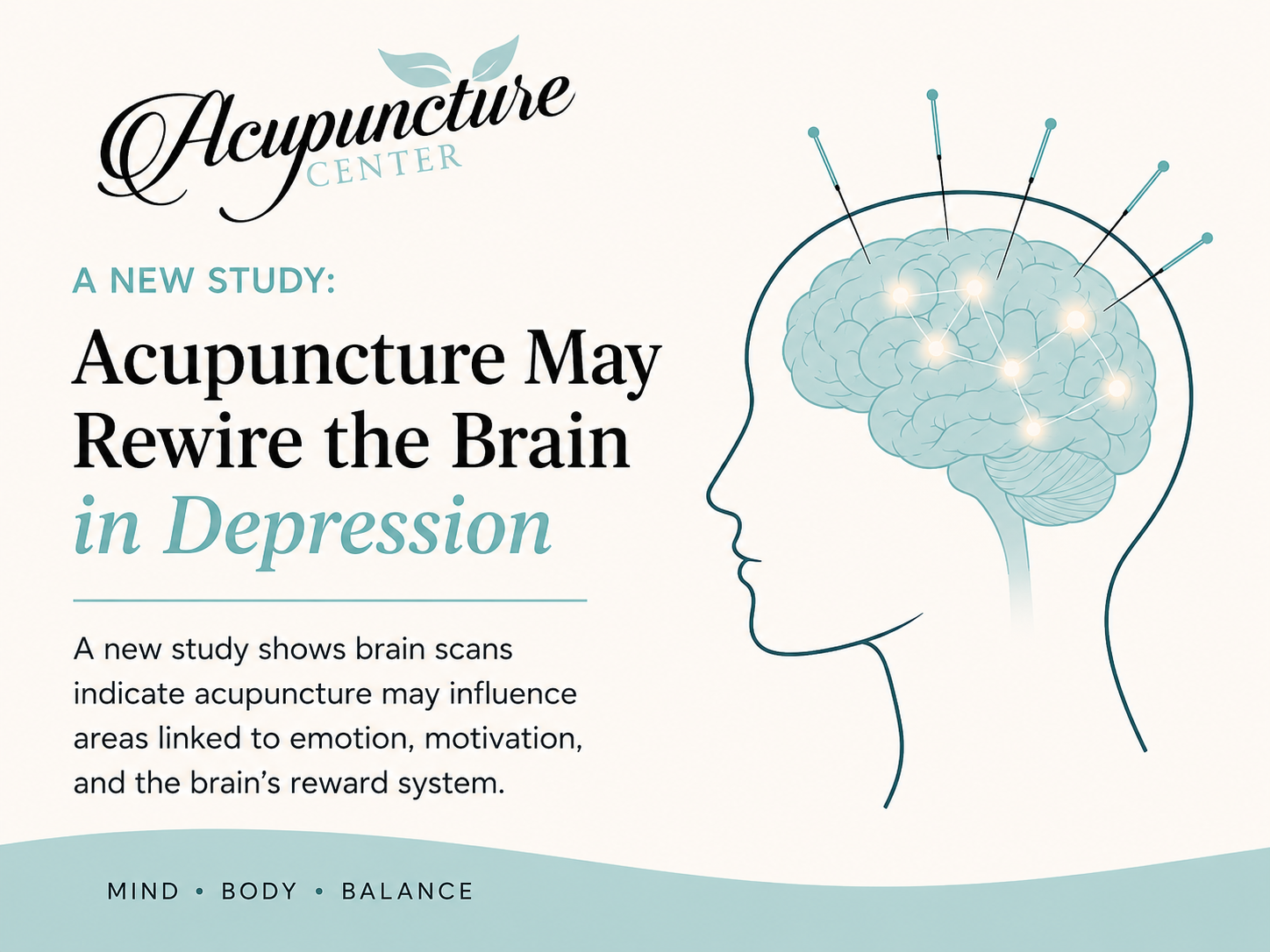
A recent article published by ScienceAlert highlighted new research suggesting that acupuncture may influence brain regions involved in emotion, motivation, and reward in people with major depressive disorder. The findings are particularly interesting because the brain changes associated with acupuncture appeared to differ from those seen with conventional antidepressant treatment.

While researchers are still learning exactly how acupuncture may affect the brain, the study adds to a growing body of research exploring its potential role as a complementary treatment for depression.

What Did the Research Find?

The research discussed by ScienceAlert was published in the medical journal Medicine. Researchers led by a team from Beijing University of Chinese Medicine reviewed brain-imaging data from seven previous clinical trials involving 357 people with major depressive disorder.

Rather than simply looking at whether participants reported feeling better, researchers examined changes within the brain itself.

Among participants who received acupuncture, researchers identified changes in areas associated with emotional regulation and the brain’s reward system. In particular, increased activity was observed in the right cingulum and right caudate nucleus. Researchers also found an association between receiving more acupuncture sessions and changes within the amygdala, an area heavily involved in processing emotions.

In other words, acupuncture may be influencing some of the neurological pathways involved in how people experience and regulate emotions.

Acupuncture and Antidepressants May Affect the Brain Differently

One of the most interesting aspects of the research was that acupuncture and antidepressant treatment did not appear to produce identical patterns in the brain.

Participants receiving conventional antidepressant treatment showed changes in areas including the hippocampus, which plays an important role in memory and stress regulation, and a region involved in visual processing. Acupuncture, meanwhile, appeared to have a stronger association with areas related to emotion and reward processing.

That doesn’t mean one approach is necessarily “better” than another. In fact, most of the people receiving acupuncture in the studies were also taking antidepressant medication. Instead, researchers believe the findings may help explain why acupuncture could potentially complement conventional mental health treatment rather than simply duplicate its effects.

Why the Brain’s Reward System Matters

Depression can affect much more than mood. Some people experience a loss of interest or pleasure in activities they normally enjoy, a symptom known as anhedonia.

Because the caudate nucleus is involved in motivation and reward, changes in this area could offer one possible explanation for why acupuncture has been associated with improvements in certain depressive symptoms.

Researchers noted that the relationship between changes in emotional brain circuits and improvements in symptoms may offer clues about how acupuncture works neurologically. However, they also emphasized that scientists still do not fully understand the biological mechanisms involved.

Acupuncture May Support the Brain in More Than One Way

This isn’t the only recent research examining acupuncture and brain activity.

A separate 2026 randomized, sham-controlled study found that people receiving real acupuncture for mild-to-moderate depressive disorder experienced improvements in depression and anxiety scores. Brain imaging also showed increased activity and stronger connectivity within portions of the prefrontal cortex, an area involved in functions such as emotional regulation, attention, and decision-making.

Other 2026 research has likewise explored changes in cerebral blood flow and functional connectivity following acupuncture in people with major depressive disorder.

Together, findings like these are helping researchers investigate acupuncture as more than simply a relaxation technique. They suggest there may be measurable neurological responses occurring during and after treatment.

What Does This Mean for People With Depression?

It is important to keep the findings in perspective.

The research reviewed by the Beijing University of Chinese Medicine team involved a relatively small overall number of participants, and the seven clinical trials did not all use identical acupuncture protocols. Researchers say larger and more diverse studies, along with longer follow-up periods, are still needed.

Acupuncture should also not be viewed as a replacement for prescribed medication, psychotherapy, or other mental health treatment without guidance from an appropriate healthcare provider.

Instead, acupuncture may be considered as part of a broader, individualized approach to wellness and mental health.

A Complementary Approach to Emotional Wellness

For people dealing with stress, low mood, anxiety, or emotional fatigue, acupuncture treatments can be tailored to the individual rather than focused solely on a diagnosis.

At NJ Acupuncture Center, acupuncture may be incorporated into a wellness plan designed to support relaxation, sleep, stress management, and emotional balance.

The emerging brain-imaging research is exciting because it offers scientists new ways to understand why some patients report emotional benefits from acupuncture. As research continues, we may gain an even clearer picture of how acupuncture interacts with the nervous system and the brain.

For now, the findings offer another compelling reason to continue studying acupuncture as a complementary option for supporting both physical and emotional well-being.

This post was inspired by David Nield’s August 18, 2026 ScienceAlert article, “Acupuncture Seems to Rewire The Brain in Depression, Scans Reveal,” which reported on research published in the journal Medicine.


How Acupuncture Can Help Ease Anxiety—Naturally

If you struggle with anxiety, you’re far from alone. According to the Anxiety & Depression Association of America, anxiety disorders affect over 40 million adults in the U.S. each year. And while therapy, medication, and lifestyle changes are common treatment routes, more people are turning to holistic methods like acupuncture for relief.

So, how can a few tiny needles help with something as overwhelming as anxiety? Let’s break it down.

What Exactly Is Acupuncture?

Acupuncture is a form of traditional Chinese medicine that’s been around for thousands of years. It involves inserting ultra-thin needles into specific points on the body to promote healing, restore balance, and improve overall well-being.

In Chinese medicine, anxiety is thought to stem from an imbalance in the body’s energy (or “qi”), often tied to the heart, spleen, or kidney systems. In Western medicine, the benefits are often explained through the nervous system and brain chemistry.

Either way, acupuncture has been shown to affect the body in ways that can directly ease symptoms of anxiety.

Acupuncture and the Nervous System

When you’re anxious, your body tends to live in “fight or flight” mode—heart racing, shallow breathing, and a brain that just won’t shut off. Acupuncture helps flip the switch from that heightened stress response into a more relaxed, parasympathetic state, also known as “rest and digest.”

Studies have found that acupuncture can reduce activity in the amygdala (the brain’s fear center) and regulate the production of stress hormones like cortisol. In fact, a 2017 systematic review published in the Journal of Acupuncture and Meridian Studies found acupuncture to be “a promising treatment” for anxiety, especially generalized anxiety disorder (GAD).

The Science Backs It Up

There’s growing evidence to support what practitioners and patients have known for centuries. A 2016 meta-analysis in the Journal of Evidence-Based Complementary & Alternative Medicine reviewed multiple studies and concluded that acupuncture has a “statistically significant effect” on reducing anxiety.

Another 2021 randomized clinical trial published in PLOS ONE showed that acupuncture was effective in reducing both anxiety and depression symptoms in patients undergoing fertility treatments—an especially high-stress experience.

While more large-scale studies are still needed, these findings are promising and support acupuncture as a safe, low-risk complement (or alternative) to more conventional anxiety treatments.

What Does an Acupuncture Session for Anxiety Look Like?

Your first visit usually starts with a conversation. An acupuncturist will ask about your physical health, emotional state, sleep, digestion, and lifestyle to get a complete picture of what’s going on.

Once you're lying comfortably on the treatment table, the practitioner will gently place needles at specific points on your body. Common points for anxiety are located on the wrists, feet, ears, and sometimes the forehead or chest.

Most people find the experience deeply relaxing—some even fall asleep during treatment! A session typically lasts about 30–45 minutes, and the effects often build over time with regular visits.

Why Acupuncture Works So Well for Anxiety

Acupuncture isn’t just about treating a symptom—it’s about treating the whole person. That’s part of what makes it so effective for anxiety, which often shows up in both emotional and physical ways.

You might come in for tight shoulders, insomnia, or digestive issues, and soon realize your mood and stress levels are improving too. That’s because acupuncture helps regulate the body’s systems in a holistic way.

Benefits may include:

  • Better sleep

  • Fewer racing thoughts

  • Reduced physical tension

  • Improved digestion

  • More emotional balance

And because acupuncture has virtually no side effects, it’s a safe addition to most wellness routines—even if you’re already taking medication or seeing a therapist.

Is Acupuncture Right for You?

If you're looking for a natural, supportive way to manage anxiety, acupuncture could be a great fit. It’s gentle, non-invasive, and designed to bring your body back into balance.

That said, anxiety is complex, and what works for one person may not work for another. Acupuncture is often most effective when combined with other healthy habits—like mindfulness, exercise, proper nutrition, and professional mental health care when needed.

Ready to Feel More at Ease?

Anxiety doesn’t have to rule your life. Whether you’re dealing with occasional stress or chronic worry, acupuncture offers a calming, time-tested path toward relief.

At NJ Acupuncture center we’re here to support your mental and emotional wellness—one needle (and breath) at a time. Want to learn more or book your first session? Click here.

Acupuncture and Depression

Acupuncture and Depression

Recently, Bustle explored something very near and dear to our hearts — the relationship between acupuncture and mental health. Specifically, the relationship between acupuncture and depression.

Speaking to various doctors and practitioners, it spoke of what we already know to be true, but love to hear it time and time again — that acupuncture can, and does help those struggling with a depressed mood.

We know that maintaining a balanced flow of qi can work wonders for mental health, and can release positive-feeling endorphins as well as a calming effect, too.

Bustle spoke with Dr. Josh Klapow Ph.D, a clinical psychologist, who also explained how acupuncture can be a helpful treatment for depression because it can reduce muscle tension, soothe the central nervous system, and improve your mood. It's also an excellent way to take time out of your day for yourself.

Though, Dr. Klapow said that studies have found that acupuncture isn't an effective primary treatment for depression, but rather is most effective when used in conjunction with other options as well. (Like therapy, exercise, dietary changes, etc.)

The article also explored research that has been performed looking into the matter — some positive and some less so.

Some of the more affirming studies included a review study published in the British Journal of Midwifery in 2018 which, “looked at 1,592 studies of depression and acupuncture to see if there was evidence that acupuncture might help postpartum depression." Only three studies fit the bill, and only one of those three showed that acupuncture might be as effective as the antidepressant fluoxetine hydrochloride (Prozac) for treating PPD. The other two studies didn't show much difference, but it certainly didn't seem as if acupuncture did any harm.”

We believe that giving acupuncture a try is ALWAYS worth it — as it quite literally can’t hurt, and can only help.

Acupuncture and Depression

Suffering from the winter blues? Or perhaps it’s something a bit more — like depression?

We understand. In fact, it’s quite common to experience a bit of a low period following the hustle and bustle of the holiday season. So, let acupuncture help.

Acupuncture and Depression

As recently reported by HealthCMi, when acupuncture is combined with herbal medicine, it is effective for alleviating depression.

Researchers in China concluded that “a modified version of the herbal formula Chai Hu Shu Gan San plus acupuncture is effective for the treatment of depression. By using the Hamilton Depression Rating Scale, serum cytokine (correlated with markers of depression) and neurotransmitter levels, they determined a total effective rate of “100% for patients receiving both acupuncture and herbal medicine.” T

Those who received acupuncture only had an 85% total effective rate, and only herbal medicine had a 87.5% total effective rate. Thus proving that when the two treatments are combined, it is undoubtedly most effective.

The groups that received acupuncture received treatment at the following acupuncture points:

  • Yintang (extra point)

  • Baihui (DU20)

  • Sishencong (extra point)

  • Shenting (DU24)

  • Neiguan (P6)

  • Shenmen (HT7)

  • Sanyinjiao (SP6)

  • Hegu (LI4)

  • Taichong (LV3)

  • Taiyang (extra point) 

Throughout all the highs and lows of life, acupuncture can help you to restore a sense of well being and relaxation — providing a bit of peace and calm we all deserve.

 And of course, if you’re severely struggling or are having thoughts of self-harm or harm to others, seek professional help immediately or call 911.


Feeling Down This Winter? You May Have Seasonal Affective Disorder...And Acupuncture Can Help

It’s cold. You wake up and it’s dark, you head to work, and before you even leave work it’s dark again. Repeat over and over again.

Depending on where in the country or world you live, the above description hits close to home. Winter can be fun for the holidays and those who like cold weather activities, but for many, the short daylight hours can take a real toll on one’s emotions. Seasonal Affective Disorder (SAD) is a form of depression that is linked to the seasons, with susceptible people experiencing it most commonly during fall and winter months. Symptoms of Seasonal Affective Disorder include depression, intense fatigue, difficulty concentrating, consistent negative thoughts and decreased social interaction.

Anyone who thinks they may be suffering from Seasonal Affective Disorder should seek out mental health care. But in lieu of any medication, those who are looking for relief should consider acupuncture a major part of your care plan, too. That’s because acupuncture is uniquely suited to treating mood disorders, including depression and Seasonal Affective Disorder. Through acupuncture, we can address the root causes of SAD, targeting specifically the areas of the brain and body that respond to light and seasonal changes. Alleviating qi stagnation in the liver can also be a priority, as the liver is a key part of the body that acts as a mediator between our internal and eternal environments.

Most medications for mood disorders only temporarily treat symptoms, not root causes, and they do so by inputting potentially harmful chemicals into our bodies. Acupuncture is a natural, holistic and lasting treatment. For those who suffer from Seasonal Mood Disorder, acupuncture can help you get through the doldrums of the winter months and leave you feeling energized, happy, and ready to take on the day!

How Acupuncture Helped Ease A Woman's Anxiety

It is well-established, with scientific backing, that acupuncture is effective at treating anxiety. Acupuncture’s ability to regulate the body’s qi often helps those who suffer from anxiety feel more relaxed, more in control of their emotions, more present and more confident. We can go on in detail about how and why acupuncture is a valuable part of a treatment regimen for those suffering from anxiety, but we love when we come across personal stories of those who are discovering acupuncture’s benefits for the first time.

So when we saw this personal, first-person account on Popsugar from author Alexandra Hubbel the other day, we couldn’t help but smile…and of course share it with you.

Alexandra tells of how she was suffering from a number of symptoms like dizziness and inflammation, stemming from what she believed was her anxiety. When a friend suggested acupuncture, Alexandra was skeptical at first but gave it a shot.

Then comes our favorite part of the story. As Alexandra writes:

The acupuncturist actually listened. She let me cry. She sympathized. She offered advice. And she didn't make me feel crazy or overdramatic or try to blame my physical symptoms on anxiety and depression alone.

This represents something important to us that doesn’t often get talked. We can’t speak for everyone, of course, but we can promise that we’re a judgment-free zone. It is important that every patient feels comfortable coming to us and describing what they are feeling—that way we can accurately treat what is ailing them. It’s understandable that many people are apprehensive about telling an acupuncturist about something like anxiety. But we are here to help with anything you may be going through and build out a personalized treatment plan that will create lasting change.

Alexandra’s acupuncturist told her “that there's a light at the end of this painful, exhausting tunnel.” We couldn’t think of a better way to describe acupuncture’s goal.

Acupuncture Helps Veterans with PTSD Sleep Better

4th-of-july-america-flag-6895 (1).jpg

Post-Traumatic Stress Disorder, otherwise known as PTSD, is a disorder that develops in people after they have experienced a shocking, scary or traumatic event. It can either be short term or chronic, and symptoms include bad dreams and trouble sleeping, feeling tense and on edge, having angry outbursts, depression, and more. PTSD affects around 8% of Americans, around 24 million people.


While anyone who experiences a traumatic experience can become affected by PTSD, Awareness around PTSD has grown in the public consciousness over the past few years in relation to military veterans who suffer from it. The situations that our servicemen and women endure are unsurprisingly incredibly difficult to deal with emotionally. Unfortunately, adequate care for our veterans is not always top of mind in our country.


Thankfully, studies are beginning to show what acupuncturists have known—that the ancient practice is an effective, safe, and lasting treatment for PTSD, particularly the insomnia and uneven sleep patterns that veterans suffer from. A recent survey done at the Atlanta Veterans Affairs Medical Center in Georgia in conjunction with Emory University determined gave a group of veterans, with a mean age of 40 and suffering from PTSD and mild traumatic brain injuries 10 acupuncture administrations. The other half of the group received sham acupuncture, and the findings were clear.


“Acupuncture provides meaningful relief for a particularly recalcitrant problem affecting large segments of the veteran population,” the study said. The relief was judged by sleep study, measured by the Pittsburgh Sleep Quality Index, and showed that those who received acupuncture received a 2.7% increase in sleep efficiency.


If you or anyone you know suffers from PTSD and particularly struggles with sleeping, let them know that acupuncture is here to treat them safely and for the long term. And don’t forget to thank them for their sacrifice and service to our country!