
What Brain Scans Are Revealing About Acupuncture and Depression

Acupuncture has long been used to support emotional well-being, stress management, and overall balance. Now, emerging research is giving scientists a closer look at what may actually be happening inside the brain during acupuncture treatment.
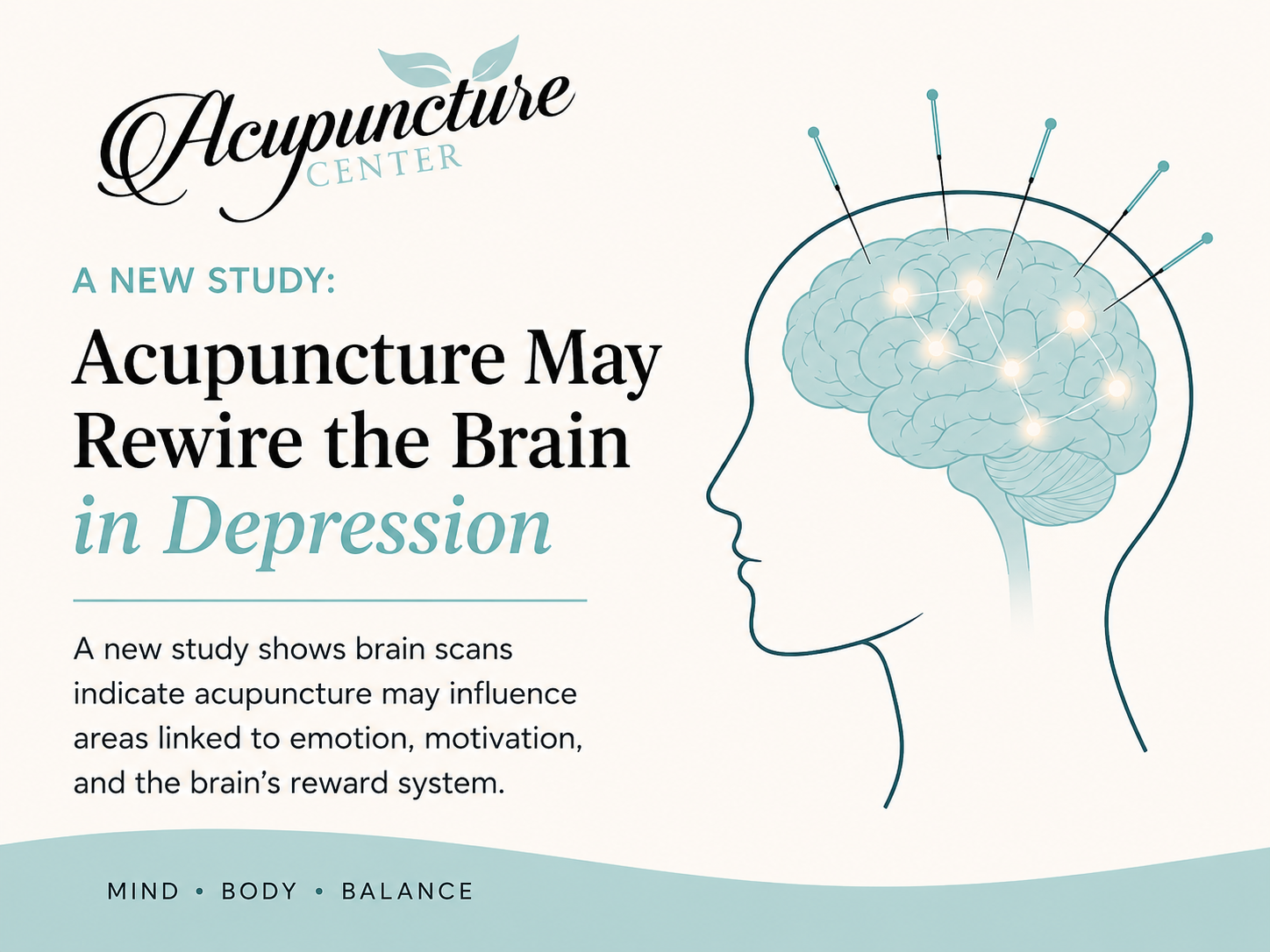
A recent article published by ScienceAlert highlighted new research suggesting that acupuncture may influence brain regions involved in emotion, motivation, and reward in people with major depressive disorder. The findings are particularly interesting because the brain changes associated with acupuncture appeared to differ from those seen with conventional antidepressant treatment.

While researchers are still learning exactly how acupuncture may affect the brain, the study adds to a growing body of research exploring its potential role as a complementary treatment for depression.

What Did the Research Find?

The research discussed by ScienceAlert was published in the medical journal Medicine. Researchers led by a team from Beijing University of Chinese Medicine reviewed brain-imaging data from seven previous clinical trials involving 357 people with major depressive disorder.

Rather than simply looking at whether participants reported feeling better, researchers examined changes within the brain itself.

Among participants who received acupuncture, researchers identified changes in areas associated with emotional regulation and the brain’s reward system. In particular, increased activity was observed in the right cingulum and right caudate nucleus. Researchers also found an association between receiving more acupuncture sessions and changes within the amygdala, an area heavily involved in processing emotions.

In other words, acupuncture may be influencing some of the neurological pathways involved in how people experience and regulate emotions.

Acupuncture and Antidepressants May Affect the Brain Differently

One of the most interesting aspects of the research was that acupuncture and antidepressant treatment did not appear to produce identical patterns in the brain.

Participants receiving conventional antidepressant treatment showed changes in areas including the hippocampus, which plays an important role in memory and stress regulation, and a region involved in visual processing. Acupuncture, meanwhile, appeared to have a stronger association with areas related to emotion and reward processing.

That doesn’t mean one approach is necessarily “better” than another. In fact, most of the people receiving acupuncture in the studies were also taking antidepressant medication. Instead, researchers believe the findings may help explain why acupuncture could potentially complement conventional mental health treatment rather than simply duplicate its effects.

Why the Brain’s Reward System Matters

Depression can affect much more than mood. Some people experience a loss of interest or pleasure in activities they normally enjoy, a symptom known as anhedonia.

Because the caudate nucleus is involved in motivation and reward, changes in this area could offer one possible explanation for why acupuncture has been associated with improvements in certain depressive symptoms.

Researchers noted that the relationship between changes in emotional brain circuits and improvements in symptoms may offer clues about how acupuncture works neurologically. However, they also emphasized that scientists still do not fully understand the biological mechanisms involved.

Acupuncture May Support the Brain in More Than One Way

This isn’t the only recent research examining acupuncture and brain activity.

A separate 2026 randomized, sham-controlled study found that people receiving real acupuncture for mild-to-moderate depressive disorder experienced improvements in depression and anxiety scores. Brain imaging also showed increased activity and stronger connectivity within portions of the prefrontal cortex, an area involved in functions such as emotional regulation, attention, and decision-making.

Other 2026 research has likewise explored changes in cerebral blood flow and functional connectivity following acupuncture in people with major depressive disorder.

Together, findings like these are helping researchers investigate acupuncture as more than simply a relaxation technique. They suggest there may be measurable neurological responses occurring during and after treatment.

What Does This Mean for People With Depression?

It is important to keep the findings in perspective.

The research reviewed by the Beijing University of Chinese Medicine team involved a relatively small overall number of participants, and the seven clinical trials did not all use identical acupuncture protocols. Researchers say larger and more diverse studies, along with longer follow-up periods, are still needed.

Acupuncture should also not be viewed as a replacement for prescribed medication, psychotherapy, or other mental health treatment without guidance from an appropriate healthcare provider.

Instead, acupuncture may be considered as part of a broader, individualized approach to wellness and mental health.

A Complementary Approach to Emotional Wellness

For people dealing with stress, low mood, anxiety, or emotional fatigue, acupuncture treatments can be tailored to the individual rather than focused solely on a diagnosis.

At NJ Acupuncture Center, acupuncture may be incorporated into a wellness plan designed to support relaxation, sleep, stress management, and emotional balance.

The emerging brain-imaging research is exciting because it offers scientists new ways to understand why some patients report emotional benefits from acupuncture. As research continues, we may gain an even clearer picture of how acupuncture interacts with the nervous system and the brain.

For now, the findings offer another compelling reason to continue studying acupuncture as a complementary option for supporting both physical and emotional well-being.

This post was inspired by David Nield’s August 18, 2026 ScienceAlert article, “Acupuncture Seems to Rewire The Brain in Depression, Scans Reveal,” which reported on research published in the journal Medicine.



Why More Teachers Are Turning to Acupuncture for Mental Health Support

Teaching has always been demanding—but in recent years, the mental and emotional load placed on educators has reached an entirely new level.

Teachers are expected to manage classrooms, support students emotionally, adapt to constant changes, communicate with families, meet academic expectations, multitask nonstop, and remain “on” for hours at a time—all while often putting their own well-being last.

At NJ Acupuncture Center, we work with many educators who are experiencing chronic stress, anxiety, burnout, sleep issues, physical tension, and emotional exhaustion. More and more teachers are turning to acupuncture as a natural way to support both their mental and physical health.

The Mental Load Teachers Carry Every Day

Teaching is not just mentally demanding—it’s emotionally demanding, too.

Many educators spend the entire day making hundreds of decisions, regulating emotions, responding to student needs, handling overstimulation, and carrying stress long after the school day ends.

Over time, chronic stress can affect the nervous system in significant ways. Teachers often describe feeling:

  • Constantly overwhelmed

  • Mentally overstimulated

  • Emotionally drained

  • Physically tense

  • Unable to fully relax

  • Exhausted but unable to sleep well

  • Stuck in “survival mode”

For many educators, stress becomes so normalized that they forget what it feels like to actually feel calm.

How Acupuncture Supports the Nervous System

Acupuncture works by stimulating specific points on the body that help regulate the nervous system and support the body’s natural healing processes.

One of the biggest ways acupuncture may help teachers is by encouraging the body to shift out of fight-or-flight mode and into the parasympathetic nervous system—often called the “rest and digest” state.

When the nervous system is constantly overloaded from stress, the body can remain in a heightened state of tension and alertness. This may contribute to anxiety, poor sleep, headaches, muscle tension, fatigue, irritability, and difficulty focusing.

Acupuncture treatments are designed to help calm that cycle.

Many patients report feeling:

  • More emotionally balanced

  • Less anxious and overwhelmed

  • Mentally clearer

  • More rested

  • Better able to handle stress

  • Physically lighter and less tense

Acupuncture for Teacher Burnout

Burnout among educators is incredibly common. Teachers often spend so much energy caring for students that there is little left for themselves at the end of the day.

Burnout can look like:

  • Emotional exhaustion

  • Lack of motivation

  • Brain fog

  • Increased anxiety

  • Feeling disconnected or numb

  • Difficulty recovering after work

  • Physical fatigue that rest alone doesn’t fix

Acupuncture creates intentional time for the body and mind to slow down and reset.

Many teachers describe treatments as one of the only moments during the week where they are truly able to relax without needing to be responsible for anyone else.

Helping With Sleep, Anxiety & Physical Stress

Stress doesn’t only affect mental health—it often shows up physically, too.

Teachers commonly experience:

  • Neck and shoulder tension

  • Jaw clenching

  • Headaches or migraines

  • Lower back pain

  • Fatigue

  • Sleep disturbances

Long days spent standing, sitting at desks, carrying materials, working on computers, and remaining mentally alert can create chronic physical tension throughout the body.

Acupuncture may help improve circulation, release muscle tension, and promote deeper relaxation, which can positively impact sleep and overall well-being.

Supporting Emotional Regulation in High-Stress Environments

Teachers are constantly regulating not only their own emotions, but also helping students navigate theirs.

Over time, that emotional labor adds up.

Acupuncture may help support emotional regulation by calming the nervous system and creating space for the body to recover from chronic overstimulation. Many patients notice they feel more patient, grounded, and emotionally resilient after consistent treatments.

Teachers Deserve Support, Too

Educators spend so much of their lives supporting others—but their health matters, too.

Mental wellness is not a luxury. Rest is not laziness. Nervous system support is healthcare.

At NJ Acupuncture Center, we believe teachers deserve spaces where they can pause, recharge, and care for themselves in a meaningful way.

Acupuncture offers a gentle, holistic approach to supporting mental and physical wellness—helping teachers feel calmer, more balanced, and better supported both inside and outside the classroom.

Calm the Mind with Acupuncture

In a time where our mind and bodies are forced to constantly be on and connected, it’s becoming more and more difficult to just relax. With longer workdays, social pressures and increased connectivity (whether you’re working from your bedroom, office or couch), it’s nearly impossible to unplug. This can be especially harmful for those that suffer from anxiety.

Luckily, anxiety is treatable.

Acupuncture Anxiety

You might have heard that talk therapy, physical activity, and medication are all viable options for anxiety relief, and that’s true for many. Yet often forgotten about is the holistic, natural and ancient approach of combating chronic worry and tension with the art of acupuncture.

If you’re having trouble relaxing or sleeping, are consumed with negative thoughts or are tired of feeling jittery all the time, we can help.

But how, exactly?

Perhaps this article from Everyday Health puts it best when it states, “Depending on where the needles go, acupuncture can cause the nervous system to produce painkilling chemicals, jump-start the body’s natural ability to heal itself, or stimulate the part of the brain that controls emotions, including anxiety.”

In a personal testimonial found over on You Beauty, writer Avital Norman Nathman shared, “After a month of regular treatments, I couldn’t help but notice a difference. I would always have the best sleep of the week the night after my acupuncture appointment. And I would also feel lighter. My chest wouldn’t be clenched as tightly and the raw current of anxiety that seems to continuously float just beneath the surface of my skin was dissipate for a while, allowing me to experience a semblance of normalcy, if only for a little while. And I’m not the only one finding relief for anxiety with acupuncture.”

The actual acupuncture session itself can be quite calming, too – especially at NJ Acupuncture Center.  At our facility, we provide comfortable and heated beds, soothing music, essential oils for aromatherapy, and infrared heat to help calm the nervous system and encourage pure rest. 

Our massage options are also a great opportunity to soothe and muscular tension resulting from anxiety. 

If you find that fear, worry or anxiety has an unwanted presence in your life, it’s time to calm the mind and consider adding acupuncture into your wellness and self-care routines. We’d be honored to play a role in the healing process.


Acupuncture and Depression

Suffering from the winter blues? Or perhaps it’s something a bit more — like depression?

We understand. In fact, it’s quite common to experience a bit of a low period following the hustle and bustle of the holiday season. So, let acupuncture help.

Acupuncture and Depression

As recently reported by HealthCMi, when acupuncture is combined with herbal medicine, it is effective for alleviating depression.

Researchers in China concluded that “a modified version of the herbal formula Chai Hu Shu Gan San plus acupuncture is effective for the treatment of depression. By using the Hamilton Depression Rating Scale, serum cytokine (correlated with markers of depression) and neurotransmitter levels, they determined a total effective rate of “100% for patients receiving both acupuncture and herbal medicine.” T

Those who received acupuncture only had an 85% total effective rate, and only herbal medicine had a 87.5% total effective rate. Thus proving that when the two treatments are combined, it is undoubtedly most effective.

The groups that received acupuncture received treatment at the following acupuncture points:

  • Yintang (extra point)

  • Baihui (DU20)

  • Sishencong (extra point)

  • Shenting (DU24)

  • Neiguan (P6)

  • Shenmen (HT7)

  • Sanyinjiao (SP6)

  • Hegu (LI4)

  • Taichong (LV3)

  • Taiyang (extra point) 

Throughout all the highs and lows of life, acupuncture can help you to restore a sense of well being and relaxation — providing a bit of peace and calm we all deserve.

 And of course, if you’re severely struggling or are having thoughts of self-harm or harm to others, seek professional help immediately or call 911.


Acupuncture at the Border

Regardless of which side of the political spectrum you align yourself with, one thing is inarguable — tensions are high amidst the tragedy at the border. And believe it or not, acupuncture is helping.

As USA Today reported, acupuncturists are helping migrants stranded in Mexico deal with their physical and mental stressors.

Teams of volunteers lead by Acupuncturists Without Borders, or AWB (a nonprofit that treats people in disaster zones and refugee camps and trains other acupuncturists around the world) are actively providing individuals and families with free treatments throughout border towns in Mexico. 

Using NADA, the 5-point protocol that consists of ear acupuncture points to reduce stress, hundreds of migrants have received treatment this year alone, Diana Fried, AWB’s founder and co-executive director, told USA Today. Ear seeds are also used.

She told the publication, “They’ve been through enormous levels of challenges.” “It’s a very powerful experience for people who are in such a state of trauma to experience such a simple healing treatment.”

Acupuncturists Without Borders first began when Fried and a few volunteer acupuncturists traveled to New Orleans in the wake of Hurricane Katrina. The group, “ treated residents, first responders, roofers, construction workers and federal officials – more than 8,000 people in the course of a year.”

Now, they’re helping with the border crisis, too.

This story speaks to the power of acupuncture beyond what it is typically known for. Aside from physical healing, acupuncture plays a tremendous role in mental and emotional health as well. We are so grateful to be a part of the holistic healing community for those who need it the most.

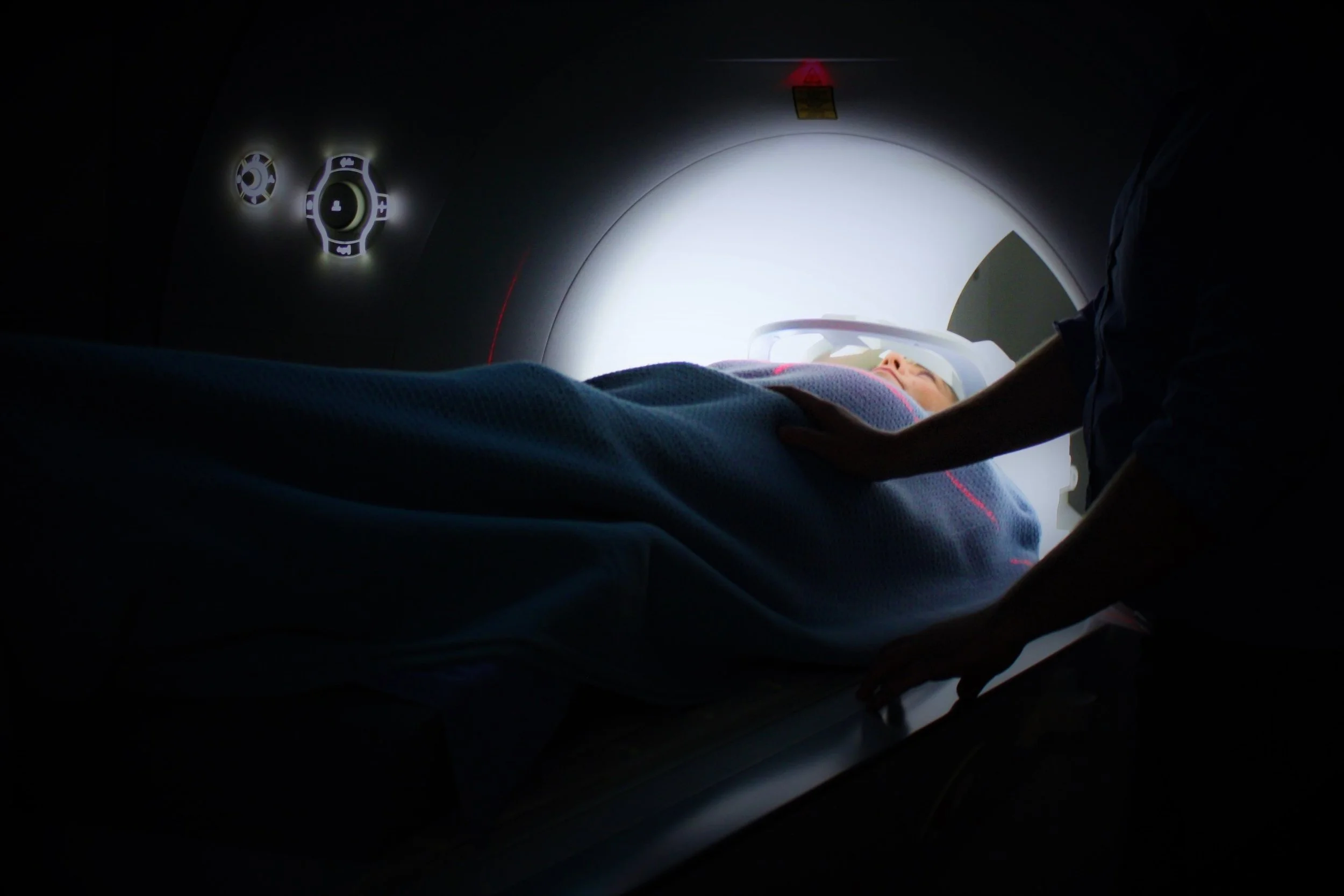
MRI Anxiety? Study Proves Acupuncture Can Help

It’s a cold, hard fact that nobody in the world enjoys getting an MRI — a procedure used for diagnostic imaging that involves immersing yourself in a well, cold and hard machine.


For people with claustrophobia, it can be a real nightmare.  


Yet thanks to a recent study published by HealthCMi, acupuncture can help.


Researchers at the Heilongjiang University of Traditional Chinese Medicine found that true acupuncture proved more effective than “sham acupuncture” (the control group”) in treating those who suffer f claustrophobia during an MRI.


Claustrophobia can be extremely problematic for both the patient and the imager. The patient may begin to feel panic attacks o extreme nervousness, and unable to continue with the procedure — leading to inconclusive results.


So researches set out to treat the nervousness and fear by, “soothing the liver qi, tonifying the kidney qi, and stabilizing the spirit and mind.”


Those who received that treatment achieved a 92.5% effective rate. Those who did not? Twenty-five percent and 17.5 percent, respectively.


So, acupuncture clearly worked.


For one session with a 30-minute needle retention rime, the rotating and twisting technique of acupuncture was performed at the following acupoints:


  • KI6 (Zhaohai)

  • LV3 (Taichong)

  • HT4 (Lingdao)

  • PC6 (Neiguan)

  • HT7 (Shenmen)

  • CV17 (Danzhong)

  • GV20 (Baihui)

  • GB20 (Fengchi)

In the sham group, they were inserted elsewhere, at irrelevant points.


After the treatment, the patients were evaluated using the SAI, or State Anxiety Inventory which assessed their emotions and anxiety. When, “fear and relevant symptoms showed improvement, and a patient could complete an MRI examination,” it was considered effective — which was 92.5% of the time.


The bottom line? Acupuncture before an MRI just might make a world of difference.

Using Acupuncture to Treat Trauma

The mind/body connection is truly undeniable. When one isn’t working properly, you can bet the other isn’t either. This is perhaps nowhere more complicated than in individuals dealing with trauma.


Trauma is a multifaceted word that embodies so much. Pain, anxiety, post-traumatic stress, memory issues, terror, difficulties adjusting to post-trauma life — it’s almost endless. But if you work to heal the mind, you can often heal the body. And you can use the body to heal the mind, too.


But with what, you might ask? Acupuncture, of course. In fact, it’s a proven way to help reduce stress and anxiety and improve sleep, which naturally lends itself to improved mental health. In dealing with something as serious as trauma, the smallest improvement can mean a world of difference.


As reported on Rfi News, acupuncturist Elise Boghossian packed up her acuneedles and headed to Iraq, leaving her lie behind in Paris and setting out to bring healing to kidnapped and enslaved women in northern Iraq.  


She told the site, ““The first time I went to Iraq I was completely alone. I didn’t have colleagues or work with a specific organization. I just had my acupuncture needles to offer people pain relief.”


Through her experiences, she eventually founded NGO EliseCare, an organization with six sites throughout Iraq that offer free medical consultations, continuous psychological care to patients, and medical training in acupuncture, emergency medical care, gynecology, radiology and biology.


You can watch her story, here.

Top 10 Tips for First Time Patients

Trying anything new for the first time can be overwhelming and even a little scary. Pair that with the concept of essentially having a stranger stick “needles” in your body, and it can be downright terrifying – but it doesn’t have to be, nor should it be.

At NJ Acupuncture Center, we fully understand that first time patients may be a bit apprehensive. SO, we put together this handy little guide of the top 10 tips for first time acupuncture patients. You can thank us later.

FullSizeRender.jpg-1.jpeg

1.     Wear comfortable, loose fitting clothing.

Depending on your needs, you can receive acupuncture treatment from head to toe. Therefore, it is essential to wear loose fitting clothing that is both comfortable, but can also be rolled or pulled up for access to all necessary meridians.

2.     Turn off your cell phone.

Unplug! This is “you” time. To best relax, turn off your phone – don’t put it on vibrate. (You’ll still hear it!)

3.     Be open and honest.

Share any medical experiences and concerns with your acupuncturist. Any emotions you’re struggling with or past experiences can only help you to receive the best treatment.

4.     Write down a list of questions, comments or concerns.

Acupuncture will work best when both you and your practitioner and you are on the same page. If you have any questions, comments or concerns -  as well as treatment goals – write them down so you don’t forget anything during your consult!

5.     Be mindful of scheduling.

It is ideal to schedule your appointment at a time that you can then relax afterwards. Though, if you can only squeeze in lunch-break appointments, any time slot is better than none. 

6.     Eat something light.

You don’t want to be super full, or super starving for your session. Ensure that you’ve eaten something light and healthy prior to your time.

7.     Show up early.

For your first appointment, there will be intake paperwork. Show up at least 10-15 minutes early to ensure you have ample time to thoughtfully and accurately complete any paperwork that is needed.

8.     Avoid caffeine.

You’ll want to be able to lay still and relaxed during your time here. So, chugging a large iced coffee prior to coming isn’t the best idea. (Really, it’s not a good idea at any time, but more on that later.)

9.     Breathe

It’s a human reaction that at times when you’re nervous or anxious, you hold your breath. Remember that breath is your life force! Breathe regularly and consistently. Focusing on your breath can help to deepen your relaxation.

10. Relax and enjoy!